Tuesday, August 27, 2013

Mr. Everyday Things: Billy Joel Day 2013

Today I’m thinking of late 70s 'fros, doo-wop comebacks, and the third best-selling solo artist in the United States. I’m thinking of American disappointment, of wars I didn’t experience, and frustrated love. I mean, I guess I’m just thinking of the whole human experience with all of the requisite high and low notes, those plot points that are revisited in pretty much every great work of art since we first put stick to sand.

In short, I’m in a New York state of mind.

I’m thinking of Billy Joel today, because (as many of my friends know) it’s a day that some fans and I set aside a few years ago for honoring the Piano Man. To celebrate properly, you should probably open a bottle of red or a bottle of white, lie down on the carpet and listen to some Billy Joel on vinyl. But, I suppose, it’s best if we all keep Billy Joel Day in our own way.  Maybe it’s a review of the interviews that he’s given, maybe it's re-reading a compendium of articles or sending a carefully-crafted piece of fan-mail, maybe it means dressing in a leather jacket and pouting at a camera.
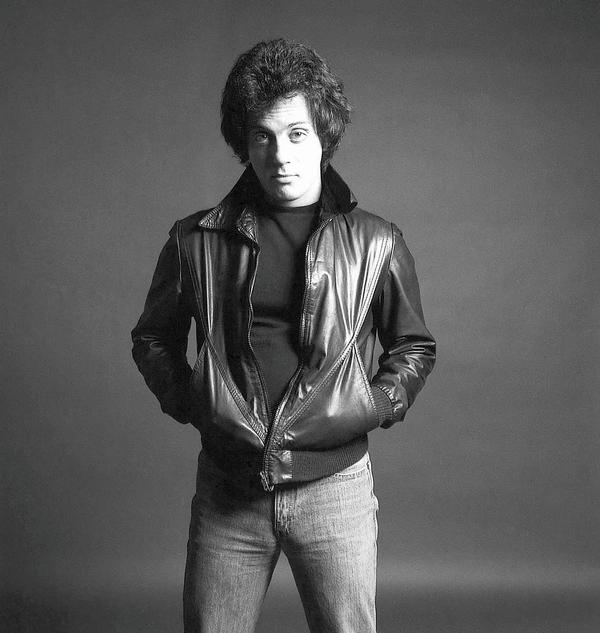

For me, it comes in a semi-annual attempt to try and articulate what separates him from other artists in my mind. We’ll see what comes of this year’s parsing.

Perhaps (least romantically and just to get started), when it comes to the metrics, Billy Joel can take everyone to the mat.
  • He has produced 11 multi-platinum albums.
  • In the world of singles, he’s scored 3 #1 chart-toppers, 13 Top Ten Hits, and 33 Top 40 Hits.
  • He is a six-time Grammy winner (nominated 23 times).
  • He has sold over 150 million records worldwide (making him the 9th most successful solo artist of all time).
  • He is featured in Rolling Stone’s Top 100 albums of all time.
When it comes to technical accomplishment, it’s really hard to out-punch Billy Joel
  • Billy Joel began his training on piano at the age of four (mostly due to the influence of his parents). And although he wasn’t a fan of it at the time, he studied classical tunes, music theory, and received the benefits of a flush musical education in spite of his family often struggling to make ends meet.
  • He was playing in bands at the age of 14 almost full-time.
  • He studied with classical legends like Lennie Tristano and Mortin Estrin.
  • He learned about and was inspired by legends that he strived to honor: Beethoven, the Beatles, Ray Charles, James Brown and many others whose influence you can hear throughout his music.
  • And unlike many other stars of his day, Billy Joel has written and composed almost all of his own songs – making him one of the most competitive, well-rounded melodists in the biz
When it comes to hard work, Billy Joel paid his famous people dues and shows up in high company:
  • He became one of the first American rock acts to play in the USSR since the Berlin Wall went up.
  • He was inducted into the Rock n’ Roll Hall of Fame in 1999 (almost 35 years after he began his musical career) by his hero and major influence, Ray Charles.
  • The singer's stint of 12 shows at Madison Square Garden broke the former record held by, The Boss, Bruce Springsteen, who played 10 sold-out shows at the same arena. That record earned Joel the first retired number (12) in the arena owned by a non-athlete.
  • In 1991, he bagged ‘Grammy Legend Award’, a special award for merit given to the recording artists.
  • In 1997, he was given the ASCAP’s founder award for lifetime achievement.
But… I guess…

In the end…

…I’m not talking about any of that…

I like William Martin Joel, because he’s a geek in a way that is very familiar to me.

Actor Simon Pegg recently weighed in on the fan culture social classification system. His description has been memed and shared across various social media in the past year. Pegg said:

“Being a geek is all about being honest about what you enjoy and not being afraid to demonstrate that affection. It means never having to play it cool about how much you like something. It’s basically a license to proudly emote on a somewhat childish level rather than behave like a supposed adult. Being a geek is extremely liberating.”

Billy Joel’s a geek. And about two very important things. He’s a geek for music and he’s a geek for human beings.  

The greatest tragedy of the socially inept artist, is how reverently and tender they regard their fellow humans – even when that love results in a missed connections. Which, even in recent interviews, is the subject that Joel is most haunted by: his loneliness and longing for connection. Billy Joel, to me, with his sensitivity (and sometimes oversensitivity) is a great example of the intelligent nerd who is awed by the miracle of the world they are functioning in. Think of this favorite Joel moment -when he and a Vanderbilt student jam at a question and answer session:


and how pleased he is to invite another young artist onto his stage. Or (one of the moments that inspired the first Billy Joel Day) an instance in this 70s performance of New York State of Mind when Joel actually “geeks out” (as I would classify it) over a saxophone solo at the song’s climax (the solo begins around 6 minutes, 15 seconds, Joel’s reaction just after that)


He's so moved by being around a musical talent, that he stops his own performance. As an artist and as a person, Billy Joel is someone who feels warmth over the human experience in a painful and mortal fashion. Who, in spite of a long history of beautiful women and money and success, saves some of his most sincere feelings for artists that he's revered and the loneliness that he feels that might be unquellable. 

“Some writers can write reams of great books and then J. D. Salinger wrote just a few. Beethoven wrote nine symphonies. They were all phenomenal. Mozart wrote some 40 symphonies, and they were all phenomenal. That doesn’t mean Beethoven was a lesser writer, it’s just some guys are capable of more productivity, some guys take more time… Beethoven you hear the struggle in it. Look at his manuscripts, and there’s reams of scratched-out music that he hated. He stops and he starts. I love that about Beethoven, his humanity shows in his music.”

"So I go to visit my father in Vienna, I’m walking around this town and I see this old lady. She must have been about 90 years old and she is sweeping the street. I say to my father "What’s this nice old lady doing sweeping the street?” He says “She’s got a job, she feels useful, she’s happy, she’s making the street clean, she’s not put out to pasture”. We treat old people in this country pretty badly. We put them in rest homes, we kinda kick them under the rug and make believe they don’t exist. They [the people in Vienna] don’t feel like that. In a lot of these older places in the world, they value their older people and their older people feel they can still be a part of the community and I thought 'This is a terrific idea — that old people are useful -and that means I don’t have to worry so much about getting old because I can still have a use in this world in my old age. I thought “Vienna waits for you…”
From a Q&A about using Vienna as a metaphor: http://en.wikipedia.org/wiki/Vienna_(Billy_Joel_song)

"When I look at great works of art or listen to inspired music, I sense intimate portraits of the specific times in which they were created. And they have lasted because someone, somewhere felt compelled to create it, and someone else understood what they were trying to do. Why do we still respond when we bear the opening notes of Beethoven's Fifth Symphony—DA DA DA DA? Or Gershwin's Rhapsody In Blue? Or Little Richard's Tutti Fruitti? Because when we hear it we realize that we are still bound by a common emotion to those who came before us. Like family, we are irrevocably tied to each other because that same emotion still exists today. This is what all good musicians understand."
From his Berklee College Commencement Address: http://www.berklee.edu/commencement/past/bjoel.html

I always thought it was interesting that one of the things that made Billy Joel “less cool” was his classical training. The very fact that he learned to play piano the way any of us could made him boring and unremarkable; that was a sign to the naysayers that he wasn’t “legit” the way someone whose musical blood pulsed pure and without influence. I think we’re somewhat embarrassed for him that he’s human, common and in public. And not only that… he’s singing about it. I really believe that’s part of makes him uncool – and part of what makes him so popular.

We’re talking about songs from confessionals.

I think popular artists who truly love and feel something are not only necessary, they are reassuring. They bring us sincerity and give us permission to present unvarnished emotion about what we love, what hurts, and what we hope for. These are important dialogues in an age of near-chronic irony. I sometimes worry as I listen to the latest droning explanation of why some band is “the next big thing” that unfiltered ardor is in danger of extinction. Songs of recognizably aching loneliness,  lyrics based on suicide notes or love songs that profess unassailable intimacy – it’s not a love that is enumerated, reasoned, out of reach – it’s just recognizable, human, vulnerability, and it doesn’t argue to be presented as anything else. It makes one want to stand back when someone else does something remarkable and say “what a marvelous thing to live in this fucked up universe.” And I guess that’s the way I love things, too.

It’s not particularly dignified or remarkable – but maybe that’s the most astonishing thing about it. It has no regard for how it appears. And in a world that is sometimes more concerned with the appearance of achievement, polish, and presentation, appearing just the way you are can be truly radical.

This small essay has largely been a collage of videos, transcripts, and articles. So I guess I’m still using Billy Joel’s art to explain itself. But if that’s working for you – what’s a few more? Listening to Billy Joel’s work is still one of the best ways to get in touch with him as a person and a great way to lean into some of our shared human experiences. My Billy Joel Day gift to you (the BJ songs I can’t stop listening to lately):

You're My Home:


Leave a Tender Moment Alone: 


Through the Long Night: 


This is the Time: 


All About Soul: 


All My Life: 


Tomorrow is Today: 


James: 


Just the Way You Are: 


While the Night Is Still Young: 


Vienna: 


Happy Billy Joel Day! I’ll continue to keep it in my geek heart for many years to come.

Monday, June 17, 2013

California 2013: Sense and Sensibility

Alaska is known for its beautiful and rugged landscape, a fierce (and sometimes violent) history of gold and lumber-pillaging and is still the choice setting for much fishing, hunting, and the famous Iditarod. It also boasts a compelling wildness tipping point that is more fluid than most other places in the United States: bears that wander through grocery parking lots and moose whose hulking bodies mist morning backyards. 

The natural environment offers challenges in weather, accessibility, fierce beauty and formidability. It might be one of the reasons why the people that I’ve met who have lived there are some of the most interesting individuals I have ever run into. I’ve met them on dance floors and midnight at a hotel hot tub, at motorcycle bars and video arcades. They are vibrant, friendly, and in the chorus of the universe their voices are probably the most bold (and possibly slightly off-key).  Perhaps this is why I would like to go to Alaska someday: to be away from the things of man, to be close to people who affably clash with expectation, and to encounter a place that is still a little wild. I’m jealous of my friends’ summer sojourn there.

But right now I live in California, which is perhaps at the opposite end of the spectrum. It is the land of Neptune High School, celebrity politicians, and people who have never even heard of salt damage to their cars. Flowers bloom year round here: Godetias, miniature hollyhocks, baby blue eyes. The bodies here are well-yoga'd, creative, vegan restaurants abound, and a motorcycle can be a practical commuter vehicle.  I admit that I read my friend’s warnings on Facebook about possible pipe freezes this winter with a certain degree of smugness, as though I, personally, had discovered this coastal paradise, like my arrival here was a badge of some sort of achievement that I had earned by clocking time over the past three decades in soggy or more gloomy climes.

But life has a way of straightening you out, reminding you that no matter how extravagant the sunset or how well-lit the highways are by banks of rippling, golden mustard flowers, that you are just as foolish as you have ever been. I will admit: this has been an unwieldy year for me so far.

I purchased a motorcycle: a red 2006 Kawasaki Vulcan, a great starter bike. It is like falling in love, it is like the first few months of college, I am having an undeniable romance with motorcycles: reading poems and books about them, listening to stories from older, more weathered motorcyclists at my coffeeshop as though they are handing down legend, smiling at the cheeky motorcycle quotes that I find:

“Four wheels move the body.  Two wheels move the soul.”

“The perfect man?  A poet on a motorcycle.”
Lucinda Williams

“Life may begin at 30, but it doesn't get interesting until about 150.”
note: I don’t think I’ve gone over 40 yet on my motorcycle yet. I haven’t even taken it on the freeway

A few weeks ago, I went on a short weekend motorcycle road trip with my boyfriend and another couple (not on my bike). It was so hot that my female counterpart wore a bright pink tank top while she was on the bike for that entire first day – no jacket required (note: Phil Collins reference intentional and would also like to acknowledge for my parents that this is not the safest choice – I won’t do that, Mom). We drove North through Anderson Valley, a less populated and less commercial wine country where the tastings are free and there are no corkage fees, we stayed overnight in Boonville (a remarkably small town, but with enough personality to merit its own language). Over the course of about 36 hours together we tasted more than five bottles of wine and ended the day in a garden drinking down cold hard cider from a nearby farm. We tramped through high-grassed meadows in our motorcycle gear only to strip down to our bikini bodies by the river. We traveled back
to the Bay area down the coast in the booming sunlight: the beaches of the Mendocino coast are an odd mix of West Coast and East coast: slightly gray and weathered, foggy bogs creating dunes of cherry brush and large rock outcroppings that offer dramatic coastal viewpoints. We parted ways after we broke up a chocolate chip cookie that we ate at the delta of the Russian River while an outdoor jazz band played covers of “We’ve Got the Funk.” It was a weekend full of stampeding herds of pleasures.

And yet, I had spent the better part of the Spring in distress, feeling stunted in many of my pursuits, incredibly cut-off (even left behind) from some of my best friends and most of my recent history, and a whole host of other unhelpful reflections.

No one tells you what a hard thing surviving your own mediocrity can be.

This was me in the Run For Your Lives
Zombie 5K Obstacle Course (but is
also a pretty good approximation
of my springtime
emotional state, too).
I asked my friends to forgive me: “forgive me if I am too glum, too concentrated on our inevitable self-destruction as a species, on talking about how we’re trampling the planet, or talking about my own failings and sadness.”

Suffice to say that I spent a few months under water, trying to convince the people close to me that “yeah, I was bummed, but things were manageable, that I was fine.” This, in some part, was a lie. For the most part, I’d be more comfortable being naked in public than I would be letting you see just how much I resemble a sobby, red-eyed, greasy sloth on a bad day. But stay with me here for a moment and you’ll see why I'm going to bother to mention it this time around.

I’ve spent a lot of time diagnosing that feeling when it’s cropped up throughout my life: the wrong blend of chemicals in my body, childhood experiences, new birth control, a need more exercise, less sugar, terrible jobs (past tense), terrible relationships (also past tense), maybe I needed to create a list of daily affirmations and say them to myself in the mirror, maybe I needed to get out and make some new friends, maybe I needed to get back in touch with old friends, too much TV, not enough TV. The list of things that you are doing wrong or could be doing better for your own good is seemingly endless, but there is one thing that has unswervingly paralleled with a better mood.

Writing.
Tree tunnel near Point Reyes, CA

When I am writing. Even if it’s just in my journal or on this blog or a few lines of poetry, I realize that I am healthier when I am organizing my thoughts line by line progressively down a page. In the months in which my journal is full and my blog is updated and I’ve spent some time researching and typing, I spend less time at the bottom of my own well. It had not been happening enough.

Which is why I rebooted an old pledge that a friend and I had made to each other: one poem a week. Each week, I send a poem to a friend of mine and she sends one to me and (if nothing else). In this way, I’ve made some room for creative productivity in the middle of the rest of the business in my life. And the difference has been remarkable.

I also started doing yoga four time a week, drastically improved my diet, and bought a motorcycle and the change has been remarkable. 

That is the dramatic montage version of making all these choices: it does not show my grumpiness over giving up my morning coffee or the withering looks I’ve come to give scales, but I am happy to report that all of these things have set me up for a very promising summer where I am looking forward to motorcycle adventures, road trips and reunions with some of my favorite people back East.

On the eve of my birthday I took a ride through the rolling headlands that boulder right into the Pacific ocean. It is glorious to be at the edge of America with the surf that comes in threatening undertow to humans and their dogs alike: a bit tumultuous. It is also wondrous to be in the month of April and lie on a black sand beach in the 80 degree heat. Generally I associate my birthday with damp, cold mornings and sunshine threatening to break through the clouds, but not beaches and motorcycle rides. It’s a feeling that I could get used to.

They say that smell is one of the most powerful generators of memory and not just sense memory, but emotional memory. In April, I woke up on a Monday morning and rode through the streets of waking Oakland (men in blue overalls constructing yet another watchtower-like hospital building, an officer uncommonly casual and reading the paper in his car) and was overwhelmed by how much the heat of the streets and the coming day smelled like Rome in the throws of summer. Whatever pall had been on me slipped off just a little as my sense memory catapulted into hot weather and the perspective offered by history. 

It was the same thing hiking down the hill to the beach the day before my birthday, invited by Jason* whose talent are many. But surprise, recreational botany is such an underrated and unexpected talent that it takes a special prize in my heart. Down we go on perilously, ready-to-tip log steps laid into the cliffside and with each step, he reaches his hand back behind him, handing me small crumbles of leaves and ferns that he’s crushed between his thumb and forefinger and telling me to smell, illustrating the landscape not just with information, but with perfume:
“California sage,” he announces as my lungs bellow with a white, lemony fragrance, “it’s not a true sage, but it’s one of the natives that you find along the coast.” Another few steps, “Yarrow. Now that’s a magical plant,” the smell is rotund and almost floral, “it’s good for wounds and was once used to treat soldiers in battle.”

He invites me to reach out and touch a bud of orange bouncing in the hillside breeze and I pull back my hands to find them strangely tacky. He smiles and says “sticky monkey flower.”

I don’t identify much with my astrological sign, but one quality of Taurus that has always seemed embarrassingly accurate is their sensuality, an almost feline love of tactile pleasure. In this way, a ride down to the ocean is a riot of delight. It is ocean spray, citrusy perfume, the crash of waves, some hazy horn sound like a dial tone on the water in the distance, the hot sand in comedic avalanches under my bare feet – an unstoppable collision of sense after sense.


It is almost healing and I am convinced that this is part of what appeals to we Taureans – it makes the flinty, sparking neuroses of intellect go quiet for awhile. Of course, no great insight or philosophy is achieved in this time, but it is a welcome pause from a lifetime rooted in self (even selfishness). One is more a part of the slippery cave water coming down the bluffs, the roar of wind along the highway, or the rush of clean, sugared smell of opening fresia blossoms. Sometimes it is better this way.


###

*"Wait! What? Who's this Jason person?" you ask.
"Oh yeah," I reply, "I'm dating a man named Jason."

Wednesday, February 27, 2013

Cultivating Gratitude at Urban Ore


New Years 2012: Last Time I was in NYC

I am traveling to New York today after almost two months of stationary, single-state existence. I am folded up in my economy airline seat, sipping cranberry juice and resisting the urge to read my novel. I am traveling for work (electric green sweater? Check!). I am traveling to see friends.

As glad as I am for the change of pace, which feels like an escape hatch from sometimes-tedious reality (everyone at work is sick, I’m out of cat litter again, the bank account is teetering dangerously close to zero), I find that I am somewhat attached to the rhythm of my life. I like California: its quirks, bizarre pockets of weather, and contradictions of personality.

Of course… that’s what I always like about a place.

An example, though.

The might 'cado
Here is a pleasing idiosyncrasy – the perceived tendency in California to add an avocado to everything. Something I am glad to incorporate onto just about any you-name-it. And since I’ve been informed that they’re good for the skin, I’ve been looking for opportunities to add them to everything, including chocolate mousse.

As we walked through the farmer’s market that weekend, I saw numerous varieties of avocado: Reed, Fuerte, even the curiously named “Bacon Avocado.” But the recipe I was working off of just showed that straightforward and familiar almost purple-green Hass avocado, which was born right here in California in the 1930s and took almost forty years to replace the Fuerte avocado as the standard. Granted – all avocados are originally from Mexico – originating somewhere around 6,000 BC and making the long journey to Southern California in 1871. But nowadays, 90 percent of all avocados eaten domestically come from California and 60 percent of all of California’s avocados come from the San Diego region. In fact, my favorite fact is that the mother tree of all California Hass Avocados was born in a backyard in La Habra Heights, California (near Los Angeles).

View to the Golden Gate from Coit Tower
I wonder how many of the total avocados produced are consumed by Californians.

But I’m headed out of town for the rest of the week. I haven’t been to New York in almost a year. Haven’t hugged these friends in months, so I’m headed towards the statue of liberty, Lena Dunham, and past internships that failed to lead to careers.

Big cities. A theme for my life for the past year: New York, Boston, Paris, San Francisco, London, Dublin. Thronging, irritating, vital cities. It is a long way from the one-stoplight town I grew up in and it’s funny how much I like them in spite of my affection for rural cow farms and swampy corners of New England. I visit my urban friends and everyone has advice on how to handle their cities:

“Never buy strawberries at the market on Saturday, buy them on Tuesday after they’ve been freshly purchased from the farm at the beginning of the week.”

“Sixth street is probably the most dangerous section of the city.”

“Avoid Hoxton unless you want to see one more up-and-coming hipster neighborhood.”

“I’d carry my pocket umbrella at all times.”

“I’d have a reusable grocery bag on me at all times.”

New Years 2013
People say these things with a tilt of their head and a flatness of tone that doesn’t brook questioning. Sentences that they’ve earned the privilege to say. These pieces of wisdom are badges of experience, even ownership. Something that makes it your city.

I would like that feeling. I can’t remember the last time I had some sense of it. More than ownership; belonging.

There are, however, small instances of that or a feeling similar to that here in 2013: the feeling of gladness in one’s own life. I have come to feel that the most precious feeling is not joy or romantic love or even insight or affection, so much as gratitude. Riding from North Berkeley to Lake Merritt this morning on my silent, white electric scooter was a quiet moment like that. An ice cold coffee in a thermos, inappropriate, white trimmed black high heels clicking to the pavement at each stoplight, and a big, hot sun that makes the pauses at intersections worth it. Gratitude wakes up the senses and lets us shrug off global warming for an instant so that we might appreciate the virtues of sunrise before we are too entrenched in our daily grind.

Belonging is the long arc of gratitude, and something that I continue to associate more with people than with place. Amid a pleasant stream of visitors, I recognize memories that will become part of what is my history. I am glad that I don’t always recognize these moments as they’re happening. I am equally grateful when I do.

Grapes of Wrath and Obama at Urban Ore
In Berkeley, there is a place called Urban Ore. It’s a second life for already-loved possessions. It is not for the timid or the casual Goodwill-shopper. There are truly acres to shop through here: entire sections dedicated to doors and their frames, a parking lot of still-usable toilets in a variety of colors, holographic Jesus placards and (literally) kitchen sinks. I go there with my friend R. Just the two of us roaming through a breezy warehouse on a slow Sunday morning (I think it was the morning of the Super bowl).

You could spend whole days trailing through photo albums of other people’s pictures. R and I spend a good fifteen minutes pretending that these are photos of our life and describing who these people are to us. We meander through the creaking shelves of books, we ramble fun-house style between various sets of French doors that open onto each other. I try on glasses and hats, pick through kitchenware and wish that there was an appropriate place in my life to hang a lifesize poster of the St. Paul’s Girl. All of these things that were once part of an old life, waiting for the next one.

Pulling it Off at Urban Ore
Urban Ore is a reassuring and drafty metaphor for those of us who are waiting for the next thing. All of us in different states of damage or repair waiting to fit perfectly into someone else’s life. Or wondering if we do.

Afterwards, we go back to her place and eat rinsed grapes out of a white-sided bowl that looks like it once belonged in her mother’s kitchen. We talk about how she used to wear bows in her hair (she still should) or how I hope that my bitter-girl humor doesn’t put her off (it doesn’t).

There are people I won’t see when I’m in New York, too. Acquaintances who have forgotten me or I’ve forgotten, people from unselected futures that ghost through the city. I’ll think of them, too. In a big enough city, there is no metric large enough to measure your unlived lives or potential regrets.

And much as it is a life that is still becoming, I suppose there are a few pieces of advice that make me belong at least to who I am, if not where I am. And these rules apply in any city:
  • Ride something with two wheels and you will better enjoy waking up early.  
  •  Encourage your friends to wear large statement bows in their hair or to get on stage at karaoke.
  • Share your favorite things with other people. There is perhaps no better way to cultivate gratitude.
  • Love fluffy cats and stop to pet every dog tethered outside your coffeeshop.
  • Add avocado to anything. 

Tuesday, November 13, 2012

Waiting For the Best to Come Again


As Joss Whedon is to television (for me) and Jim Gaffigan is to comedy (for me), so Jack Gilbert is to poetry (for me). And word is quickly spreading through the internet (updated even to Wikipedia now) that he died earlier this week.

Sometimes there are artists who you're sure are speaking directly to you when they are working in their medium. They have labored for hours, days or years over a scrap of dialogue, the turn of a stanza and even though the moment of laughter or insight runs through you quickly, there is something of that understanding that never leaves you, that feels like an ongoing relationship that is always happening.

Jack Gilbert was one of the few poets out there who always seemed accessible in both his work and as a human to me. I had no trouble sharing him with other people and loved passing him along through a bookstore. Accessibility is such a dirty word in the art world these days. It seems to be synonymous with simple or cheap, but Gilbert was neither. He was, I think, one of the most well-rounded philosophers of our time who was just as concerned with living well as he was with writing (not always the paradigm for an artist). He was responsible for one of the best days that I’ve had in 2012 (reading his book of poems by the lake while wearing a white dress and drinking iced coffee), crystallizing the pain and recovery of several break-ups, and he gave one of my favorite Paris Review interviews. He’s one of the books that I keep bedside for sleepless nights and one of the people that I quote for boldness or quietness (“but anything worth doing is worth doing badly”).

I had this idea of meeting him one day (the way you do with all the people that have created things that made you better at becoming yourself). The scene goes something like this: we have been introduced through some literary connection and a friend (knowing my fervor) has set up a meeting at a tea shop somewhere near Union Square. Gilbert's white beard is a wispy halo around his chin and he smiles and the brief time that has been set aside for me passes quickly with us talking the whole time. But I realize as I’m departing (re-wrapping my knitted scarf around my neck), that I haven’t asked him hardly anything; that he has been asking me about my favorite books, who I ask to read my work, what my favorite part of having a conversation is, gothic themes that I found in Jane Eyre that I continue to introduce inexpertly into my own poems. And the afternoon is gone and I’ll never ask him all the things that I should have liked to have known about him.

Kind people often leave our sight quietly and too quickly.

I'll never meet him now, but (in a way) that doesn't matter. That is not him, but that is my idea of him (borne from art). And I am grateful to have known someone like that. I am glad that he lived such a good, full life and that he populated it with poems of subtle compassion and exquisite grief. For all of your moods, good poems make good company. 

Waiting and Finding
by Jack Gilbert

While he was in kindergarten, everybody wanted to play
the tomtoms when it came time for that. You had to
run in order to get there first, and he would not.
So he always had a triangle. He does not remember
how they played the tomtoms, but he sees clearly
their Chinese look. Red with dragons front and back
and gold studs around that held the drumhead tight.
If you had a triangle, you didn’t really make music.
You mostly waited while the tambourines and tomtoms
went on a long time. Until there was a signal for all
triangle people to hit them the right way. Usually once.
Then it was tomtoms and waiting some more. But what
he remembers is the sound of the triangle. A perfect,
shimmering sound that has lasted all his long life.
Fading out and coming again after a while. Getting lost
and the waiting for it to come again. Waiting meaning
without things. Meaning love sometimes dying out,
sometimes being taken away. Meaning that often he lives
silent in the middle of the world’s music. Waiting
for the best to come again. Beginning to hear the silence
as he waits. Beginning to like the silence maybe too much.

Wednesday, October 31, 2012

Strange Currents


Two costumes deep and nowhere to wear them. A few bags of check-out counter candy run-off in a last minute panic that trick or treaters were going to come by our apartment door. I may put on my Angela Chase costume all the same and eat Almond Joys with Jordan (heheh – Jordan) while we watch Hocus Pocus on the pull-out couch. This will have to be enough holiday for now, because keeping pace with multiple lives is an exhausting business: work, writing, French class, cooking, fires on the beach, old friends coloring the west coast with an odd sort of implied time travel. Maybe I’ll pull it together for late-night Halloween karaoke. It’s possible… but I doubt it.

The kitty surveys her carnage.
The cat has eaten my Mac cord.  Literally must have swallowed pieces of it while I wasn’t watching, because not only is it in chunks, it is substantially shorter. She is a strange bird these days – racketing from room to room like a furry, white comet making little chirruping noises as she goes. She follows me while I fold clothes, clean the mirrors, look for my keys and she finds various perches from which to observe and evaluate my behavior. She is tolerant, if not affectionate, but oddly more involved and invested in the goings-on of the apartment than she ever was back in Seattle. And now she’s eating electrical accessories when they’re plugged into the wall. I worry about her.


I worry about all of my time on a motorcyle, too. In my experience, the most dangerous thing about being on a motorcycle is also one of the best things about it. Not the speed or the risk, either. It is the quiet of it. Not, certainly, the quiet of the engine or the wind that harasses even the most smartly buttoned leather coat or the roar of other irritable cars on the road – the internal quiet. Without music or conversation, there is really nowhere for you to spend time but in your own head. On a long enough ride, you can take some truly meditative journeys and find yourself at the top of Mount Diablo a bit surprised at having arrived on a peak from which you can see most of the surrounding country. One considers the validity of one’s contribution to her job, the state of climate change, whether our democratic process has really imploded, if living up to one’s potential is actually that satisfying, the regrets of past conversations. It is possible that you speak of this to no one.

Traveling to Pittsburgh in the fall means pumpkin carving and friends and the smell of leaves that reminds me of a brick-buildinged campus that is almost a decade in my rearview. It means that people I love have made a small child that has the most perfectly pink lips. This small human and I looked at each other: me, considering the first very tenuous weeks of her life that brought her here to my lap and what it will be like for her to grow up in a generation that has always known Facebook. I wonder what her prom dress will look like. Her trim little shoulders seem to shrug when I sit her upright on my thighs and frown over these thoughts.

Sandy in Nantucket, MA
Much of my family (real and chosen) is back East – scattered from Maine to Massachusetts, New Hampshire to New York. They stayed away from their windows and hoarded water in their basements with a resigned New England air as Hurricane Sandy pummeled the coast this week. My mother lost power quickly enough, even though they never cancelled her classes that she taught at school that day. My cousin on Nantucket Island sent photographs of water flooding the port and Main Street and surrounding the lighthouse of Brant Point. My pregnant cousin is still without power, ferrying herself and the rest of the family to the community center to periodically recharge their phones and shower. It is possible that they won’t have electricity before the election on Tuesday. A close friend’s basement flooded waist-high in Brooklyn and their car bobbed down the street and away.
With my hair like this...
it hurts to look at me.

These are the things that I’m thinking about on my couch while wearing a plaid shirt and black leggings, wondering whether it’s really a complete costume if I don’t dye my hair red. I’m thinking about the disparate driftwood of experience that is making up the lives of the people I know, feeling (as ever) a bit overcome.

Look, it’s a strange year and we’re caught in strange currents. Nearly everyone I know is living their life at a higher volume than they’re used to; making bigger moves and maybe vibrating at a slightly higher frequency as a result. People are moving, quitting their jobs, writing their novel, buying houses, having children, sitting in hospital waiting rooms, falling in ill-advised love, and going back to school. Maybe it’s 2012 and there’s an enormous prophesied bird-dragon headed right for us, maybe I’m in my thirties and so are many of the people that I know and love, and we’re going through those big life changes that we’ve been hearing about all these years. Or maybe I’m thinking too much. Maybe it’s not all as connected as it seems. But troubling as some of these realities are, I like thinking of my life as more comprehensive and inclusive. The boundaries between me and you don’t feel quite so linked to geography that way.

Last Saturday a small pack of East Bay kids crossed the bridge and headed for Ocean Beach: three scientists, an architect, an ex-theater kid, and a socially ungainly writer who would be the oldest person in the group. We dug a hole in the sand and built a fire that evening.

I’ve never made a fire on the beach (though I’ve certainly spun fire and watched fire spinning by sunset before on the shaded, well-trafficked beach of Golden Gardens in Seattle). But simply watching a flame swallow branches and old cardboard is better than most forms of entertainment that I pay for (internet, film, shows, museums). It is a pleasantly primal experience to hold a stick and marshmallow near a flame and watch it brown. The fire stays in your clothes for days afterwards, causes you to lean into strangers, share blankets, lick your fingers of small dabs of chocolate. It feels more permanent than most things in our commercial break world.

Just another pack of strangers discussing the weather, politics, stories we’ve loved, times that we’ve been left, nicknames we’ve adopted (by the way, I now refer to Jordan as “zombie”), all edging around the borders of vulnerability wondering what’s too much to share or say.

But what if nothing was too much and you could just say what you meant at that moment? What if you could tell strangers that you were lonely and have them put a blanket around your shoulders? What if you could tell the girl with the glasses that you think she laughs better than most of the people that you’ve known in your life? Maybe you could talk about what faith is like, where it gets lost, how difficult trust is, how grateful you are. What if simply saying things out loud felt like a solution? Perhaps that could be California in October.   

Sunday, September 30, 2012

The Endeavour Tour


Yosemite: that rich part of our natural landscape that has hosted humanity for thousands of years. The Ahwahneechee lived there, the Europeans arrived in the 1800s, railroads showed up in 1907, 89% of the region is designated as wilderness area, 20% of California's total plant species can be found within its boundaries, and it was the first park identified by the US government for preservation and protection.

And yet, when I tell anyone that I'm planning on spending the weekend camping there, the first thing that anyone brings up is the hantavirus. I am happy to report that, so far, I have survived my time there.

Which (hanta, aside), it turns out, is still a little surprising. I mean, with a renewed commitment to unembarrassed, wild "yesses," of course you agree to go camping for the weekend in the Yosemite region. It is not until after I've agreed, however, and I'm buying quick-dry trousers at REI for the first time that it occurs to me that I haven't been overnight (no-car) camping since I was about 16. This could lead to some embarrassing vulnerabilities, I realize and uncomfortable admissions about my own capabilities. I am only marginally comforted when I remind myself that this excursion is only for two days. I cannot fully humiliate myself in that time, I hope.

Sometimes there is unexpected value, however, in distance from experience, I think. There is a rare pleasure that attends remembering something that you haven't done in a long while and are pleased to discover that you can do: fitting a large backpack to sit at your hips, scrambling up a long, rock-riddled white tumble of hillside (the carrion of former glaciers), tying your hair back in your mother's old pink-flowered scarf hoping that you don't twist an ankle in your inappropriate sneakers. About thirty steps in, I was wheezing, cursing my former smoking habit and wondering how to confess that I'm not going to make it when I realized I needed to loosen the strap across my chest…  My fully expanded lungs, it turned out, were more than equal to powering their way over the rust red-clinking-talus trails. No hyperventilating necessary. It is funny how simple the solution is sometimes.

It is often this way. With a great deal of doubt and a review of past failures, I say "yes" to something that I am unsure of. This silent deliberation, followed by a resolute step forward. These choices have led to heartbreak and embarrassment and new cities and great loves. Few things worth their salt are earned at the value of "maybe."

And this is also how I come to learn things. It seems that I can only love a city after I have left it. I would like to currently ignore the maladjusted psychology implied by this observation in favor of telling you that Seattle is a city worthy of being appropriately grieved. I have only been in California two months (two flattering late summer, early autumn months, to be sure), but returning to Seattle for just one weekend – as much as it is an affirmation of my new life begun 1,000 miles south – is a sweet symphony of sensory experiences that I love: the smell of falafel on University Ave at lunch time on a weekday in the fall, the spongy and spindly couches at Seattle’s Best Karaoke, the warm bag of fresh fried donuts from the Pike’s Place market tumbling about the grainy bottom of the cinammon sugared paper bag, the jets of red layer-cake sky at sunset as I drive north to see my friend’s new house. I remind myself I’ve left, because by leaving I have affirmed how much a part of me all of these things have become. I think, in this blog I have implied that we are the (mostly invisible) things that we carry with us (the language, the friendship, the rare artifact), but it turns out we are also the things that we leave behind. But that is part of the risk of saying “yes,” I suppose, as well.

When one of the guys at work comes into my office on Friday morning and says "you want to go see the space shuttle?" - even if you have no context for what he is talking about, you say "yes" before you're even out of the seat.

Which is how I ended up at the Eastshore State Park in Berkeley on a bright September morning last week. The park extends for miles along the East Bay shoreline and the north end is a small cluster of hilltops where Saturday morning parents can take their children to fly kites. There are unexpected and spectacular views that take in the San Francisco Bay to the west and the hills of Berkeley and beyond to the east. This Friday morning, there were clusters of fleece vests and sunglassed people who had all turned their gaze to the Southeast where a small, steadily-moving smudge was coming towards us through the haze. We might have looked like cult followers awaiting the return of the mother ship and in spite of the distance that we were from the Endeavor shuttle being toured through the air, the atmosphere was that of awed expectation.

The Endeavor shuttle has clocked more than 122 hours in orbital flight, hosted 25 missions in a ten-year career and is now returning to a terrestrial home after a celestial existence. And, apparently, it's now being tugged through the skies of west coast cities to celebrate its retirement. We can come out onto our hilltops and city vistas and wave. Here it was on its farewell tour, just 1,500 feet above us, barely discernible, but everyone on that hilltop was dopey-grinned and shielding their eyes against the morning sun in what appeared deceptively like a salute.

The shuttle was piggy-backing this journey on the back of a NASA jumbo jet that made a serene loop North and then back South and at one point passed over the Golden Gate Bridge on a rare barely fogged morning. This white-tailed slow-moving object seeming to float in the sky between the two distant red bridge peaks made us all turn to watch its progress. Nobody gasped or awwwed for the moment, but that was the feeling all the same as the shuttle departed and headed south.

NASA’s shuttle fleet is being retired, marking the end of an era of pioneering space exploration.

The soundless jet retreated over the sun-burnt hills and cloud-streaked sky, and I heard someone say “there is no replacement for the Endeavour” and this information struck me as a sweet-sad hymn. It’s not the end of our age of space insight, of course. We are, after all, roving the surface of Mars, visiting space stations, slowly putting our toes into this unknown pool – all lit by a moon that we were on forty years ago. But it was nice to stand on that hill with strangers, listen to the wind on water from the Bay, sip my morning coffee, and see the legends that we have made retreat in other untraveled directions.